Chapel on the Hill

Chapel as it appeared in 1895
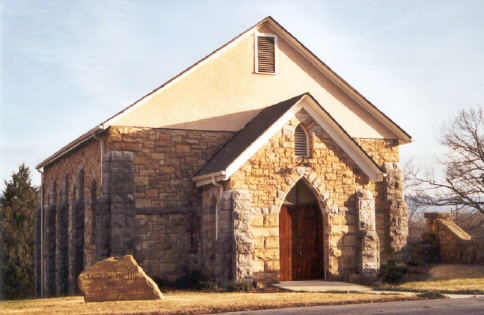
Chapel as it appeared in 2005
The Story
One of the recent projects of the South Pittsburg Historic Preservation Society Inc. is the ongoing restoration of the old Primitive Baptist Church building on Clute’s Hill. This beautiful century old hand-hewn sandstone building is located at the corner of Elm Avenue and Eighth Street.
The history of this unique structure has its beginnings on November 20, 1886 when a small group of members of the Primitive Baptist faith held a worship service in a frame schoolhouse located at the corner of Cedar Avenue and Fifth Street in South Pittsburg, Tennessee. During this service, a church covenant was signed by those present for the establishment of a permanent church within the city. Formerly associated with the Primitive Baptist Churches in Sweeten’s Cove and Jasper, both within Marion County as is South Pittsburg, these members had letters of good standing written from those churches.
In 1888, Angus McRae, a contractor from Sewanee, Tennessee, was hired by Mr. Owen Russell Beene to begin construction of a suitable house of worship for the Primitive Baptist at South Pittsburg. The new structure, which was to be constructed of sandstone blocks quarried at Sewanee and brought to the site by horse-drawn wagons, was to occupy a section of land owned by Mr. Beene near the old Gunter Cemetery on Clute’s Hill.
By the spring of 1889, the construction of the church building was completed and ready for worship. On May 17th, for the sum of $1.00, Mr. Beene transferred ownership of the church building and property to the church’s trustees. Messrs. W.O. Patton, Angus McRae, and J.C. Beene were the trustees who accepted this deed with one restriction. It stated that “if the trustees or successors fail to maintain the church organization for a period of five (5) years at any one time, then the sale and the conveyance shall be null and void and said premises shall revert to the vendor, heirs or assignees.”
The building continued to be a place of regular worship for the Primitive Baptist for 90 years and was only interrupted once when, in 1954, a fire destroyed the roof and the frame bell tower. With the exception of the bell tower, the stone church building’s roof was rebuilt and regular worship services once again commenced within the building.
In 1979, due to a declining membership, the Primitive Baptist Church at South Pittsburg ended its regularly scheduled services within the historic building. And, in so doing, ownership of the building and property reverted back to the heirs of the late Owen Russell Beene as stipulated in the restriction he attached to the original deed to transfer ownership to the church.
In 2001, in an effort to preserve the old church building, heirs to Mr. Beene transferred ownership of the building to the City of South Pittsburg. The structure has since been added to the National Register of Historic Places as part of the South Pittsburg Historic District. Since that time the South Pittsburg Historic Preservation Society Inc., working with the city, is restoring the church building, which is near completion.
Renamed the Chapel on the Hill, the work on the rustic stone structure is progressing through donations, grants from the Marion Natural Gas System and the Sequachee Valley Electric Cooperative, fundraisers, and in-kind assistance by the students of the nearby South Pittsburg High School. With the installation of a heating & air conditioning system, the Chapel on the Hill is now available for weddings, receptions, family reunions, award ceremonies, and the like. All funds generated from the rental of the building will be put into a maintenance fund for the building.
In an effort to generate additional maintenance funds, the Society has begun naming in honor of individuals the windows and pews in the Chapel for donations of $500 per pew and $2000 per window. A brass plaque denoting the individual will be placed on the selected pew or window once the donation is made. Donations may also be made in installments instead of one large payment. If interested in having a window or pew named in remembrance of a person either living or deceased or you are interested in renting the Chapel for your event you may do so by contacting the Society at: SPHPSSocial@gmail.com
Windows and Pews Brass Plaques
Windows named with inscribed brass plaque are as follows:
Prof. J. B. & Grace Dean Havron
Joe Ray & Juanita Wilson
George & Elizabeth McConnell
South Pittsburg Municipal Hospital Doctors – Viston Taylor, Russ Adcox, Jimmy Havron, Bill Headrick, Gene Ryan & John Hackworth
James Thomas Fitz-Gerald, Jr.
Mary Agnus Riggle Gentry & Ab Hembree Gentry
Lot Henry Warren
Owen Russell Beene
Descendants of Owen Russell Beene
Lodge & Kellermann Families
Pews named with inscribed plaque are as follows:
Pew #1 – In Honor of Mary Jane & Jere R. Brown
Pew #2 – Helen F. Clay
Pew #3 – Memory of Mary Lou Beene Peek
Daughter Of
George Lemuel Beene
& Jessie Carlock Beene
Pew #4 – Children of John Wiseman & Mary Luisa Beene Peek
Mary Etta Pulis
Jessie Lorene Walters
John Lemuel
Charles Russell
George Arnold
Inez Joyce Lehman
Billy Owen
Evelyn Ruth Haynie
Marshall Eugene
Helen Marie Tills
Pew #5 – Charles Russell & Sadie Z. Peek
Joyce P. Lysne
Charlene P. Warren
Kenneth Russell
William Anthony & Helen Marie Peek Tills
Debbie Marie Covey
Bonnie Marie Tills
Sherrie Marie Lavery
William Anthony Tills, Jr.
Hollie Marie Carey
Vickie Marie Lehmann Kirner
Pew #6 – In Memory Of William H. Clay Jr. & Agnes C. Clay
Mattie C. Beene
W. Ed Clay
Addie C. Gross
Harvey P. Clay & Fannie T. Clay
H. Bernard Clay
W. Frederick Clay
Creston T. Clay
Pew #7 – In Memory of Mary Lou Beene Peek
Wife of John W. Peek
Daughter of George Lemuel Beene & Jessie Carlock Beene
Given By
Evelyn Ruth Peek and Husband Fletcher Haynie
And niece Joyce Peek Lysne
In Memory of David F. Haynie
In Honor of Darrell W. Haynie and Charlotte L. Haynie Mattox
Restoration Progress Photos
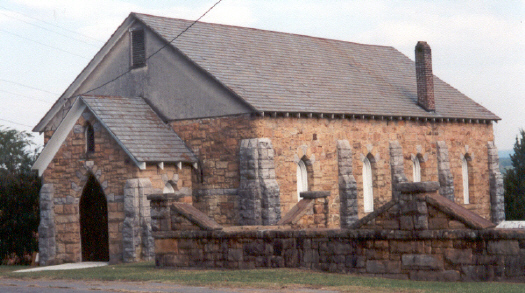
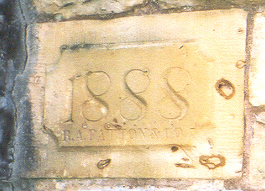
The two photographs above were taken in the year 2000 just prior to the beginning of the restoration work on the old Primitive Baptist Church building located at the corner of Elm Avenue and Eighth Street. The South Pittsburg Historic Preservation Society, Inc. took up the challenge that year after ownership of the historic structure was transferred to the city.

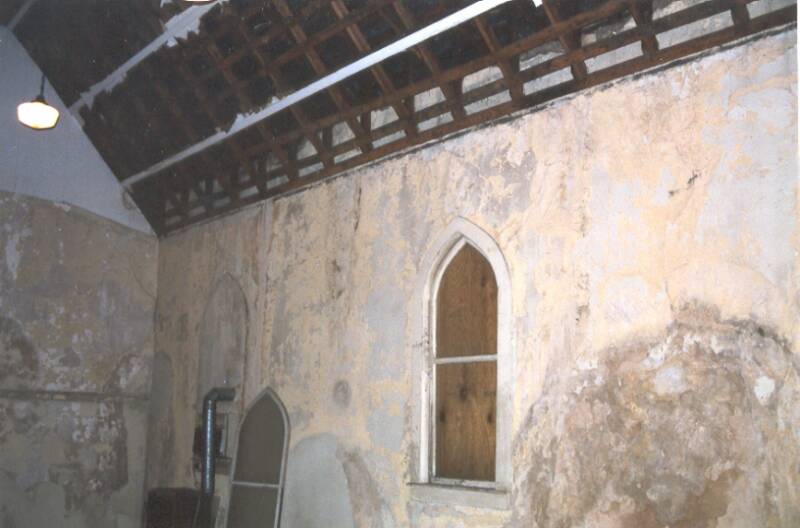
The photographs above were taken in April 2000 showing the poor condition of the plaster on the interior walls. This damage was the result of the roof leaking combined with moisture penetrating through the mortar joints of the sandstone walls.
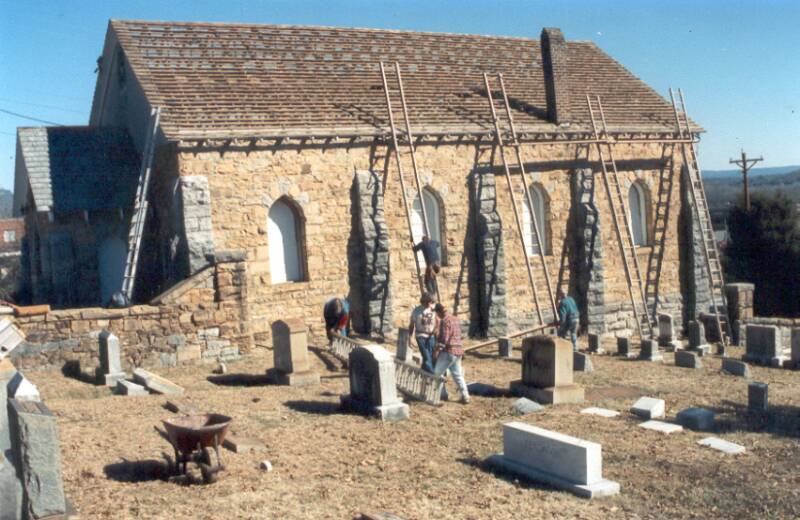
The photograph above was taken in February 2001 by the South Pittsburg Hustler and shows workmen nearing completion of removing the old roof and decking from the historic Chapel in preparation for a new roof.
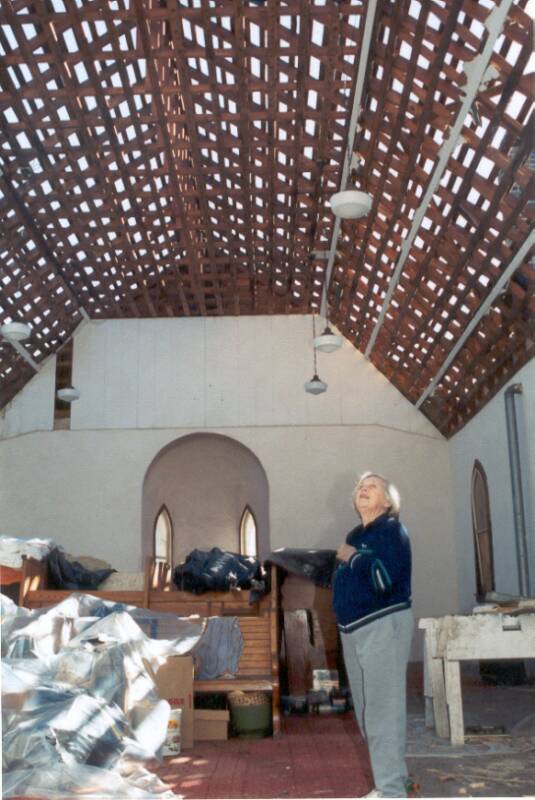
Pictured here is Society member, Bebe, Fuqua, who was looking skyward at the recently removed ceiling, which allowed natural light to enter the building from the roof for the first time since the roof and ceiling were rebuilt after a fire destroyed them in 1954. The picture was also taken by the South Pittsburg Hustler in February 2001.

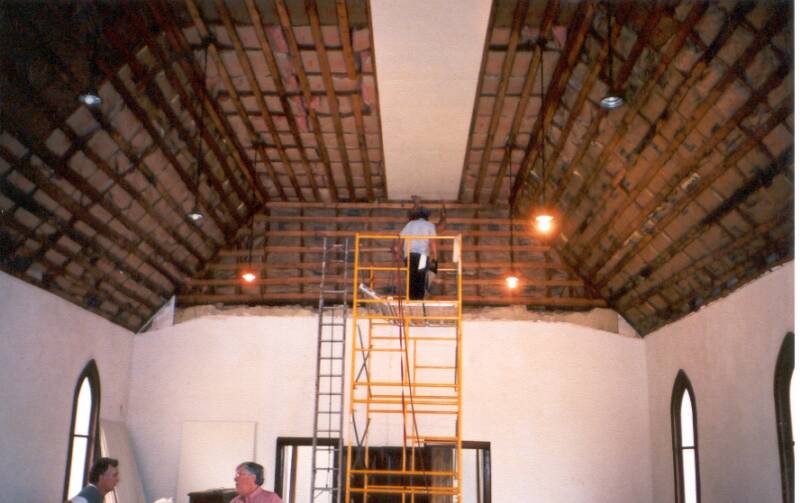
Workmen are pictured above preparing to install the Chapel’s new ceiling in July 2002. Note the height of the ceiling and the amount of scaffolding needed to complete the work. Also, note that the plaster on the interior walls has been patched and repainted.
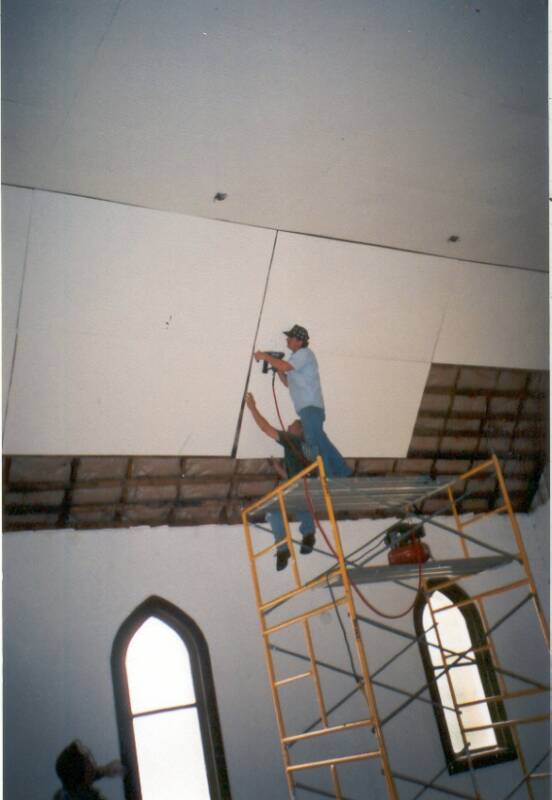
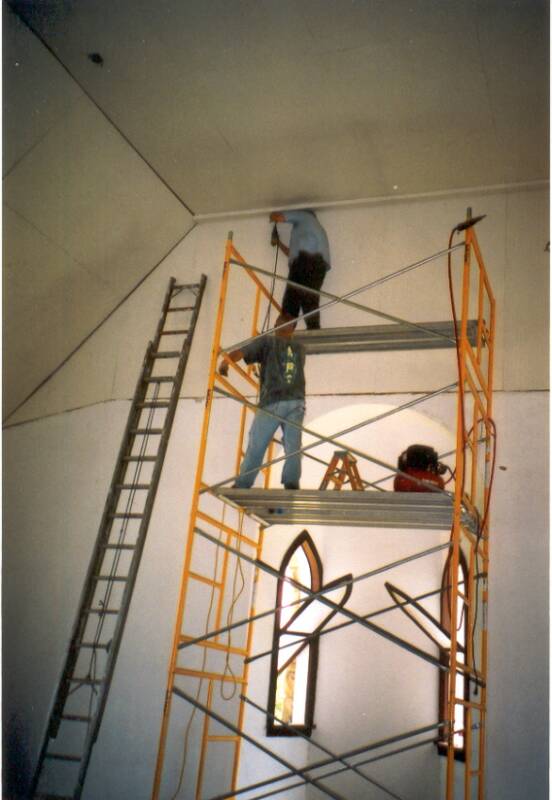
Workmen are pictured above nearing completion of installation of the Chapel’s new ceiling in July 2002.
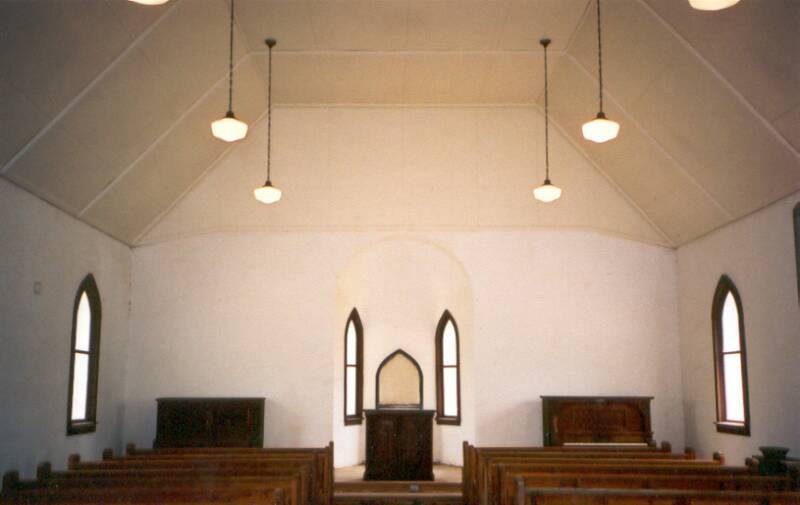
Pictured above in July 2002 is the newly completed ceiling in the Chapel on the Hill at South Pittsburg, Tennessee. Now on to the next project.

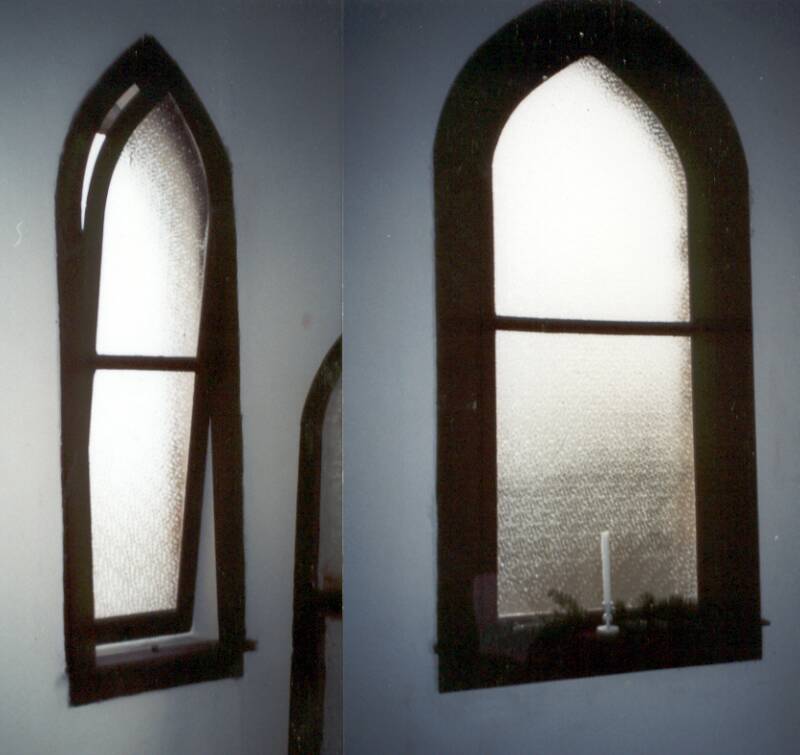
The two photographs above were taken in the December 2001 showing the new windows in the old Chapel. The building had been set up for its first public showing in the Society’s very first Christmas Tour of Homes on December 8th of that year.
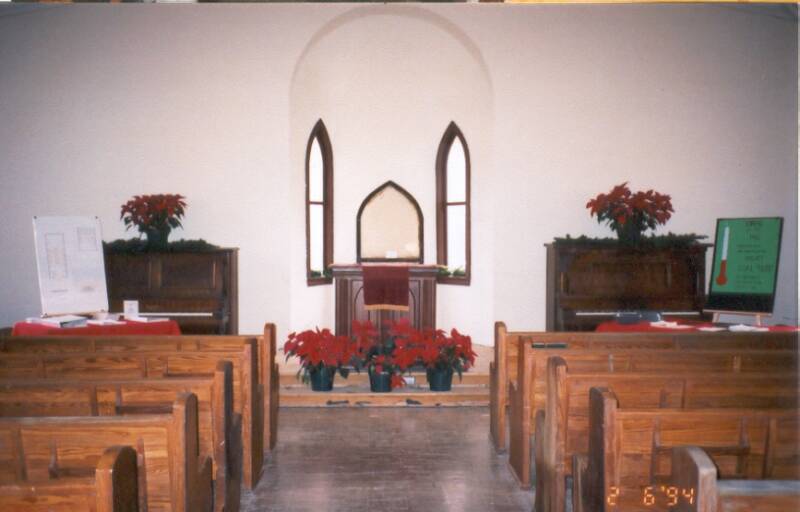
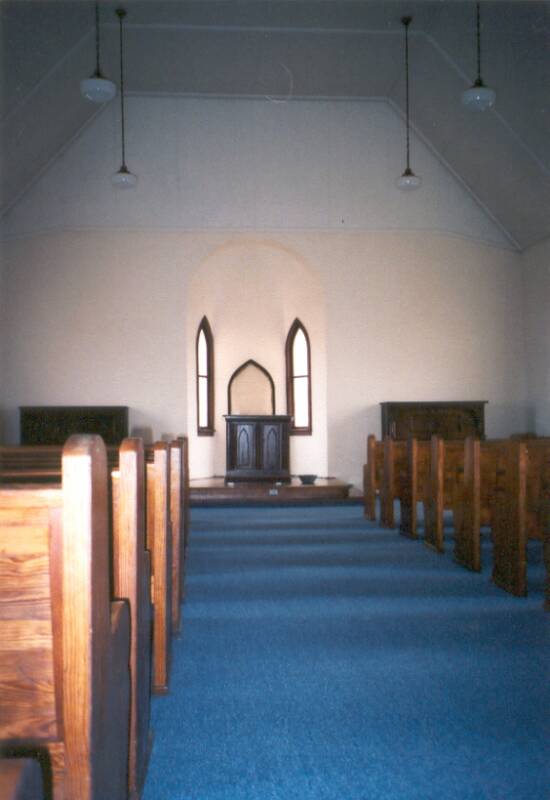
The photograph above was also taken in the December 2002 showing the aisle leading to the pulpit in the old Chapel. The building had been set up for its second public showing in the Society’s Christmas Tour of Homes on December 8th of that year.

The restoration of the Chapel on the Hill was done so in hopes that it would generate its own maintenance funds through rentals to the public for weddings and other events. Before the completion of the restoration effort, the Chapel was rented for a wedding ceremony on October 1st. 2003. The photograph below was taken in December of 2003 showing the new blue carpet, which was donated by Shaw Industries Inc. in South Pittsburg, Tennessee.

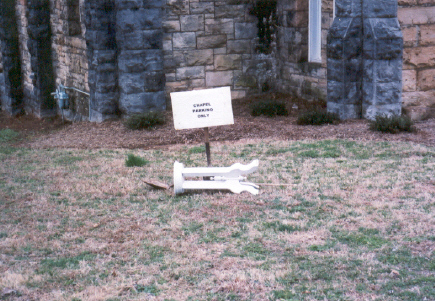
The two photographs above were taken on March 4, 2004. The first shows the new sandstone Chapel stone sign laying in the front of the Chapel ready for erecting. The stone was donated by Sam Hunter and Jim Rogers donated time and vehicle for the transportation of the stone to and from the engraver. The second picture shows location where the stone will be placed.

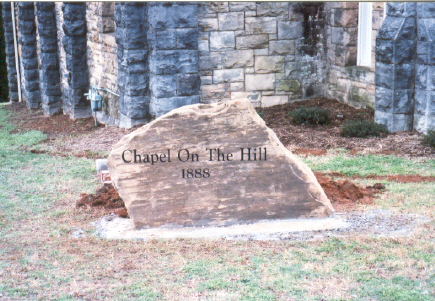
The first photograph was taken in the afternoon of Thursday, March 4, 2004 as Dennis Lambert begins to break ground for the footing for the new stone marker. Pictured left to right are: Lambert, Carolyn Millhiser, Doris Durham and Susan Mack. The second picture was made the following day after the stone had been set into a concrete footing. Employees of Rogers Funeral Home in South Pittsburg used a burial vault crane to position the stone into place. After being set and leveled, Lambert worked the concrete into place setting a permanent marker for the Chapel on the Hill.
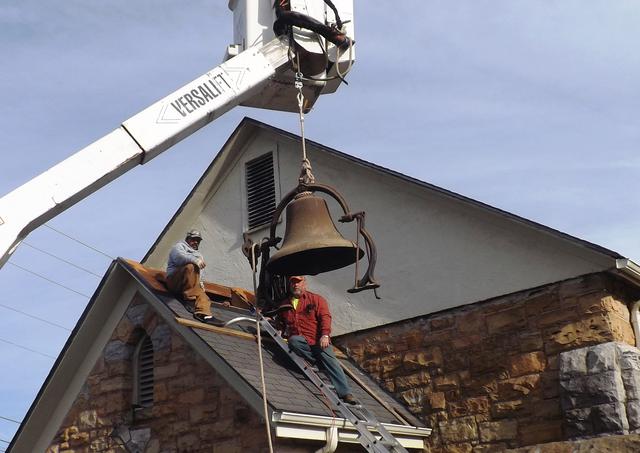
In this photograph made by Bob Hookey on January 15, 2016, you can see the old chapel bell being removed through the roof by the City of South Pittsburg Street Department and Caps Roofing. The old bell, which had its rocking wheel burned off in the 1954 fire that destroyed the original Chapel roof and steeple, was removed at our Society’s request so that we can restore it and build a stand for it. We plan to dedicate it to a late member of our group who was instrumental in getting the chapel restored.
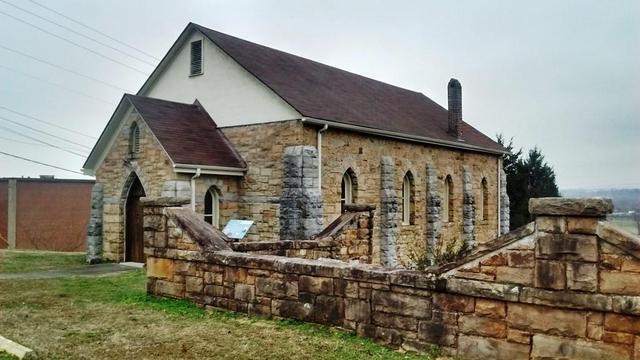
This photograph was made by Dennis Lambert on January 21, 2016 and shows the new roof we had installed on the chapel after contracting with Caps Roofing to do the work. The previous roof was showing signs of aging and it was decided to replace it before it had a chance to start leaking.
The New Sign
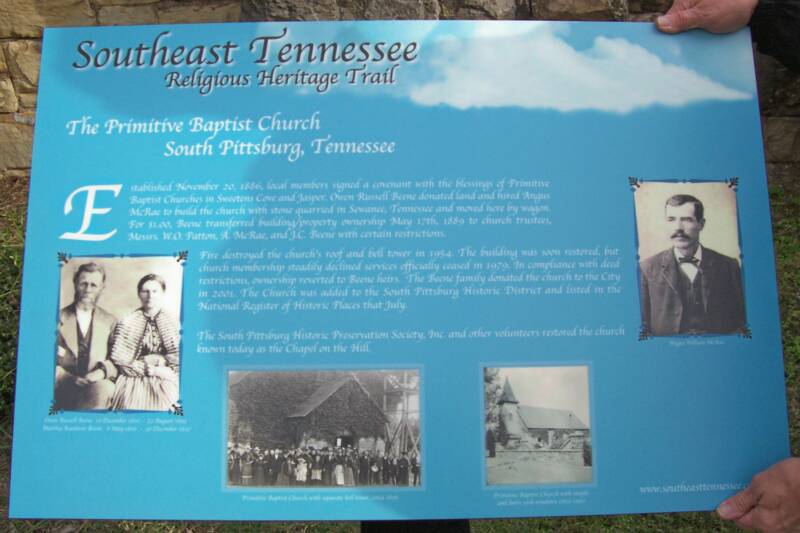
The Chapel on the Hill has a new interpretive sign for designation to the Southeast Tennessee Heritage Religious Trail. The sign arrived in October 2007 and was paid for in part by the Southeast Tennessee Tourism Association and the South Pittsburg Historic Preservation Society. Located at the corner of Elm Avenue and Eighth Street, the sign will be set to the right of the historic structure.

South Pittsburg Historic Preservation Society chairman, Bob Hookey, holds the new Chapel on the Hill interpretive sign in position for this photo. The Chapel was designated to the Southeast Tennessee Heritage Religious Trail, which has been developed over the last couple of years. Also included on the trail locally was the Christ Church Episcopal located the corner of Third Street and Holly Avenue, Holly Avenue United Methodist Church at 415 Holly Avenue and Our Lady of Lourdes Catholic Church at 700 Holly Avenue. Others locally included are the Virgin of the Poor Shrine (Catholic) in New Hope, Tennessee and Saint John the Baptist Church located on Ladd’s Cove Road near Martin Springs, Tennessee.

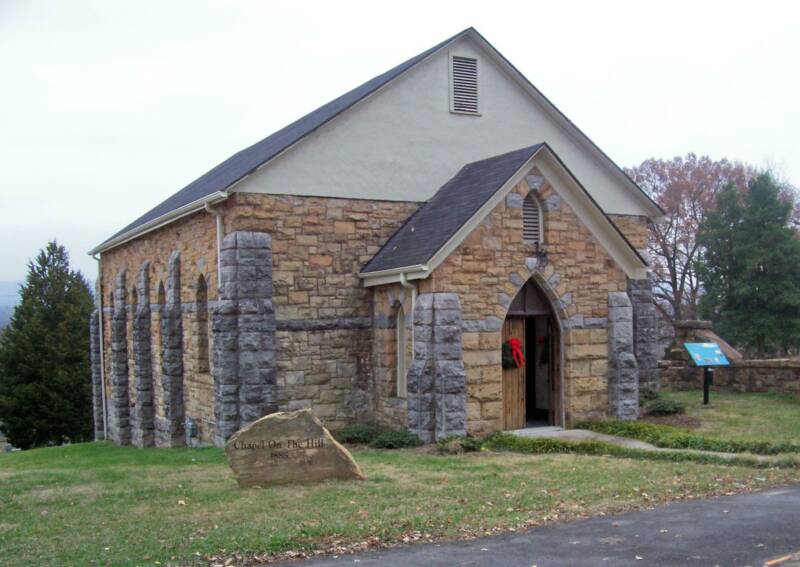
The Chapel on the Hill sign, pictured above, was installed Sunday afternoon, December 2, 2007 by Society historian, Dennis Lambert. Bob Hookey, chairman of the South Pittsburg (Tennessee) Historic Preservation Society, assisted with the pouring of the concrete the Wednesday before. Some stone furnished by Carolyn Millhiser, Society’s secretary, was used to dress up the concrete. Photos above made December 2, 2007.
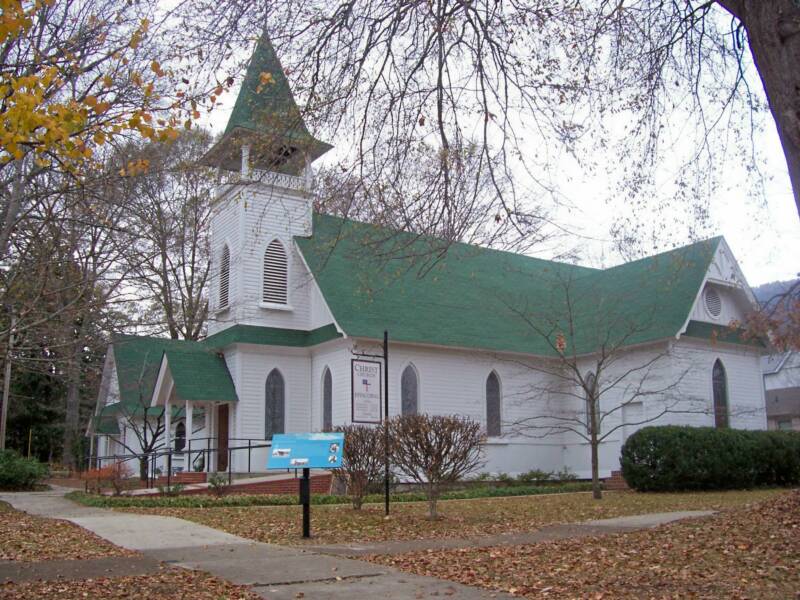
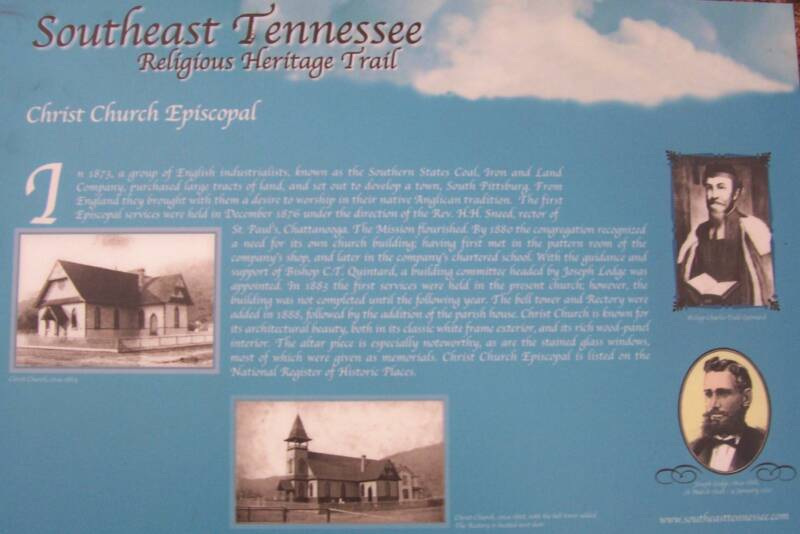
Along with the Chapel on the Hill, the Christ Church Episcopal at Third Street and Elm Avenue in South Pittsburg was also designated to the Southeast Tennessee Heritage Religious Trail. The photos above, taken by Dennis Lambert on December 2, 2007, shows the church and position of the sign, which was placed a few days before, and a close up of that sign.
Princess Theatre
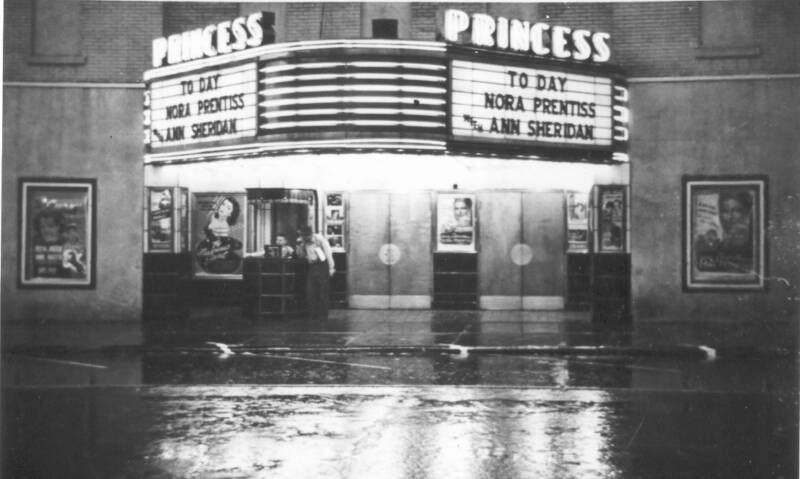
The Princess Theatre in 1947
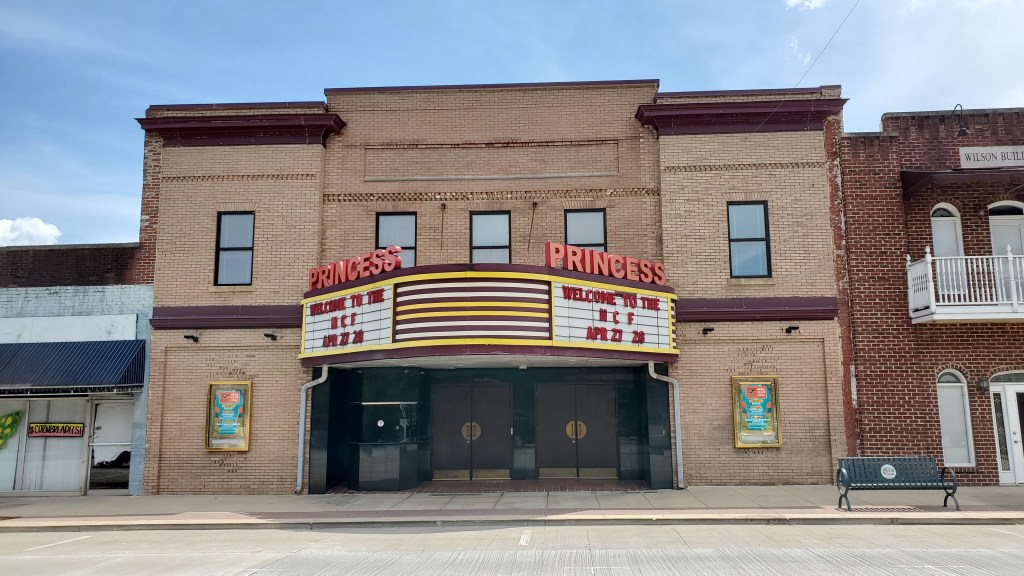
Princess Theatre in 2024
The Story
The Princess Theatre building, formerly known as the Imperial and the Palace, on Cedar Avenue in downtown South Pittsburg, Tennessee, has been a landmark within this community for more than 82 years. The theaters operated here over those years entertained the local population since the days of the silent movies. Those days have long since past with the last movie being shown here in the early 1980s.
The historic structure, with the exception of serving as a church for a short time, has, for the most part, sat vacant since that time with little or no maintenance. Decay set in once the roof started leaking, which took the once proud two-story structure to the brink of total collapse. Even the marquee over the front street entrance was not immune as time faded its paint while mischievous children and vandals broke out the neon lights surrounding it.
South Pittsburg was no stranger to motion pictures before the construction of the Princess Theatre building. In fact, the city not only had a theater operating here as early as 1908, but also had a direct connection with at least two of the big screen movie stars. Tom Mix, who starred in dozens of early westerns, once worked in security and management at the local Penn-Dixie cement plant before leaving here for Hollywood. Jobyna Ralston, a native of the city, played the leading lady in many early films with many having been shown in South Pittsburg. This connection with early films and the need of a suitable building to house a motion picture establishment would lead to the construction of the Imperial (Princess) Theatre building.
In February 1920, Mr. R. F. M. Kirkpatrick acquired two lots fronting Cedar Avenue in the downtown block #3 with each measuring 25 by 140-foot for the construction of a theater building. Construction began a short time later on a two story brick structure, which was designed and built by local architect, Mr. Reece B. Patton.
On or before Friday, July 29, 1921, the Imperial Theatre opened for business in the new building, under the management of Mr. O. C. Ogg. The opening film was the silent motion picture “Tank Town Follies,” starring South Pittsburg native Ms. Jobyna Ralston. The new theater was an instant success and drew patronage from both, young and old alike.
The theater continued operations under the “Imperial” name and management of Mr. Ogg until he sold it to Mr. H. G. Jenkins in 1924. One of the first orders of business for the new owner was to give the theater a new identity by changing its name to the Palace Theatre. The theater opened under her new name the week commencing Friday, November 14, 1924 with the first feature movie being a serial titled “Beast of Paradise,” chapter six.
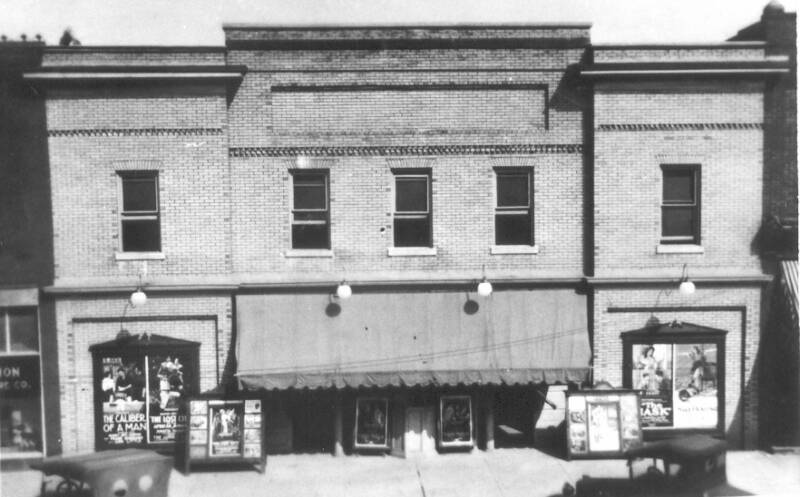
The Imperial Theatre on Cedar Avenue opened in July 1921 and is pictured above just a few weeks after its grand opening. In 1924, the theater was sold and reopened as the Palace Theatre before changing ownership again in 1934 and reopening as the Princess Theatre. It was during this last ownership change that the marquee was added to the facade.
Photo courtesy, Bob Hookey.
In September 1929, the Palace Theatre along with the new Jackson Theater at Bridgeport, Alabama six miles away, merged and began to show the same movies on the same days. Both theaters continued operations under their original names. That same year the first movie with sound, “Carnation Kid”, was shown at the Palace Theatre
In August 1931, the Palace Theatre, which was still under the management of Mr. Jenkins, was closed for a short time by its owner so that a new “Western Electric” sound system like that of Chattanooga’s Tivoli Theater could be installed. The Palace Theatre at South Pittsburg formally reopened on August 18, 1931 with its new sound system and new seats, which were installed during the shutdown.
In April 1934, the general manager of the Cumberland Amusement Company, Mr. R. T. Hill, announced that his company had recently acquired ownership of the Palace Theater and that it would be operated after that as part of that company’s chain of one dozen theaters located throughout middle and east Tennessee. The company closed the theater at South Pittsburg on June 1st for one month while conducting extensive repairs and remodeling. Other improvements included a modern sound system, new lighting system, new cushioned seats, new big screen along with many other changes.
The theater, under the management of Herman McDowell, formally reopened as the new Princess Theatre on Monday night, July 2, 1934 with a showing of “Sadie McKee” starring Joan Crawford. Also showing with this main feature was the “Pathe News” along with the cartoon, “Willie Whopper.”
Around 1947, the theater building’s front was painted in Art-Deco colors and a neon-lighted marquee was added. Also, the interior walls were covered over with homosote wallboard and then were painted in an Art-Deco fashion.
After changing ownership a few times, the Princess Theatre continued operation until 1963 when management closed its doors for the last time. It is believed that a combination of factors lead to the steady decline in patronage, which ultimately forced the theater to close. The first of these was the opening of the South-Port Drive-In theater near Bridgeport a few years before, which was more popular with teenagers and young adults who comprised the majority of the movie viewer market. The second factor in the closing of the Princess Theatre was television. By 1963, most families in the local area owned at least one television set and with nearby Chattanooga being the home of three television stations, each being affiliated with a different network, a variety of viewing entertainment could be seen by the local population with minimal expense.
In 1976, Mr. Jim Trippe of Fort Payne, Alabama bought the old Princess Theatre and began conducting extensive equipment updating and began extensive repairs for reopening the historic landmark as a family theater. On Friday evening, October 29, 1976, the old theater was reopened after thirteen years of sitting idle as the new Valley Cinema. Its first feature film was “Ode To Billie Joe” starring Robby Benson and Glynnis O’Conner. The admission price was one dollar for children under the age of twelve and two dollars for everyone over the age of twelve.
This operation only lasted a few years before closing. The historic building from this point onward received no additional restorations and very little maintenance. It sat vacant until the 1990s when a church rented the structure for worship services. The use of the old theater building by the church only lasted a short time, before the church moved from the decaying structure.
By 1999, after sitting vacant for several more years, the two-story building had deteriorated to a point that the roof collapsed and a portion of the north wall was in danger of doing the same. This prompted officials to condemn the building, which would be razed if the local populace and officials did not mount an effort to save the historic theater building.
Was there any hope of salvation for this local piece of Americana? Could it be saved and a new use found? Would anyone step up to the challenge and prevent a gaping hole from being torn into the downtown business block if the structure was condemned and razed? The answer to all three questions is yes!
That same year, 1999, a group of concerned citizens began a drive to salvage the historic theater building for a community arts center. The City of South Pittsburg purchased the theater from its Alabama owners and then appointed a commission of local officials and citizens to develop and execute a plan for the building’s restoration. At the same time they were to formulate plans to acquire the necessary funds to achieve their goal.
Since that time the commission has evolved into an independent non-profit organization known today as the South Pittsburg Historic Preservation Society, Inc. This preservation group, through various fund-raisers, grants and donations, has stabilized the theater building.
Unfortunately, the damage to the building from several years of unchecked deterioration was so severe that restoration will take several years. The Society has expended thus far in excess of $100,000 in its efforts to restore the Princess. Included in these expenditures are: securing the site and cleanup of debris from roof collapse, rebuilding of north brick wall, installation of footings, supports, joist and decking for a new roof, acquisition of four hundred theater seats and two projectors along with the hiring of an architect to develop construction drawings. In 2003 and 2004, a new roof, repairs to the facade and marquee along with the rebuilding of the rear wall have all been completed or are in the process.
Funds are still needed to bring the building back to its former glory. Plans are to seek this funding, in part, through public and private grants, which will assist in the completion of the Princess restoration project. A partnership with Lodge Manufacturing Company has produced a cookbook, which includes recipes passed through generations of families. The Society’s commission from the sale of each cookbook, the monies raised from the sale of the 1899 South Pittsburg Hustler reprint, private donations, and other funds raised are used to underwrite the restoration in phases.
Once restoration is complete, a beautiful facility will be available to the public for generations to come. It will be a functioning community auditorium capable of housing awards ceremonies, concerts, country music performances, movie festivals, music/dance recitals, pageants, plays, school programs or business conferences just to name a few. The Princess will be, upon completion, once again a place of community pride and a testament to what a community can do when its citizens and businesses work together in teamwork for reaching a common goal.
Dennis Lambert
December 12, 2004
Vintage Photos Donated By Jack A. Ellis and Charlene Turner
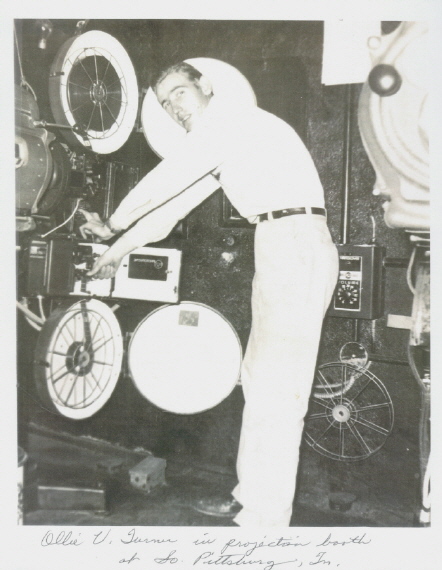
Ollie Vernon (Mutt) Turner, projectionist at Princess Theatre in South PIttsburg, Tennessee, is pictured above preparing the projectors for a film’s showing in the 1950s. “Mutt” was the husband of Rachel Caves Turner and father of three children – Charlene, Jerri and Eugene.
Courtesy, Charlene Turner Hudson
Below are nineteen vintage views of the Princess Theatre and some of those who worked there and/or visited. These great images were donated by former South Pittsburg resident, Jack A. Ellis of Hixson, Tennessee. He worked as the Princess Theatre projectionist from 1948 to 1953. The South Pittsburg Historic Preservation Society, Inc. would like to say thanks to Mr. Ellis for his gracious donation.
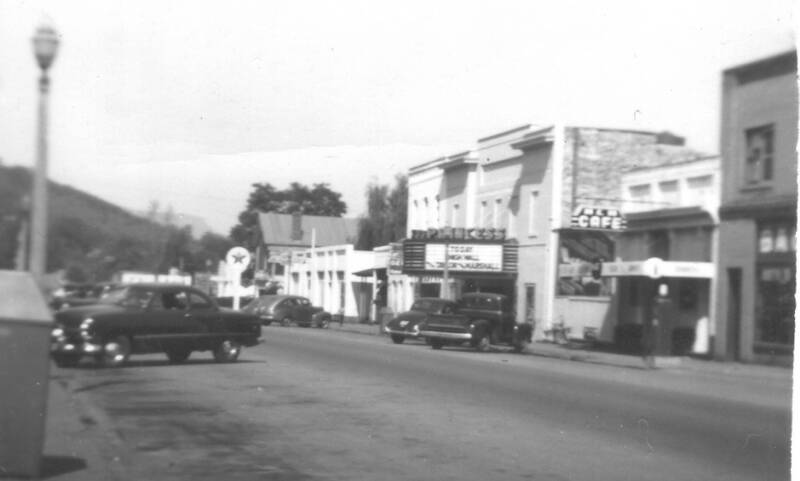

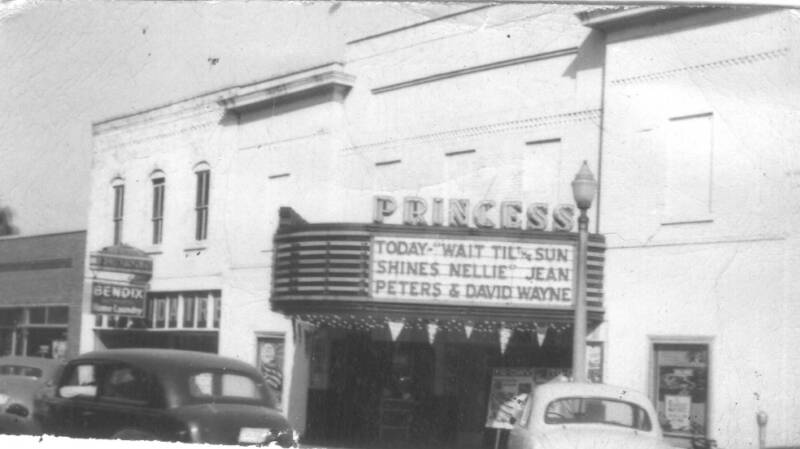

Taken on June 27, 1949 this picture of the marquee for the Princess Theatre advertises “June Bride” starring Bette Davis showing on the big screen.
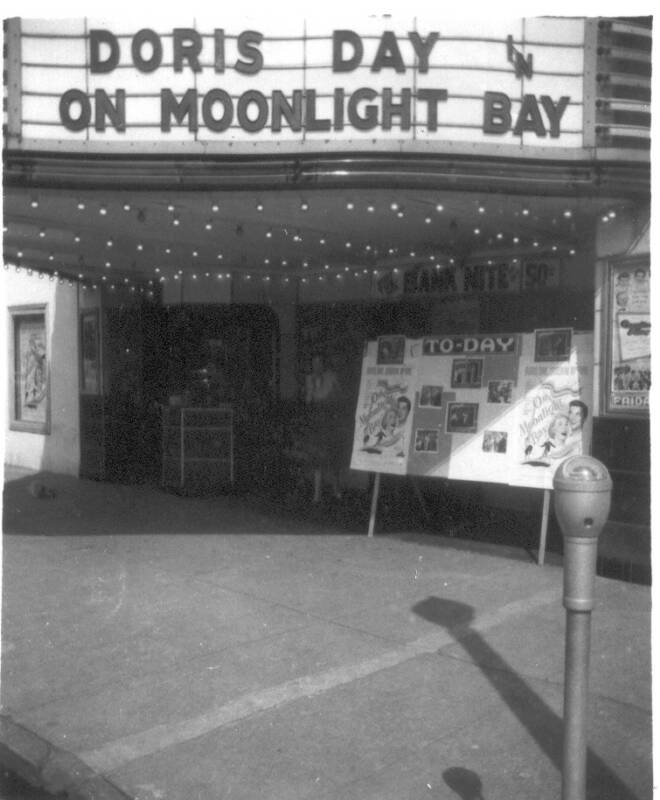
Check out the old parking meter in front of the Princess Theatre. This must have been a modern marvel first when placed along Cedar Avenue.

The Princess Theatre ticket booth is pictured above with Jack A. Ellis inside.
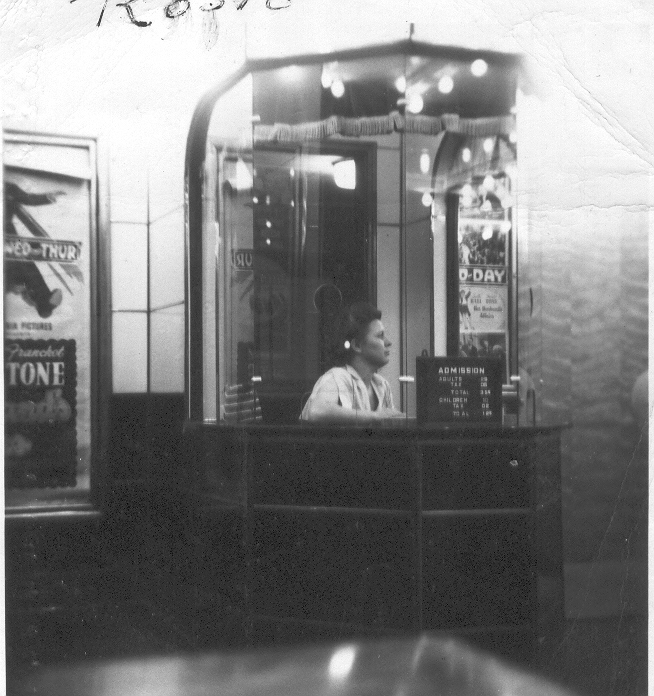
Pictured above inside of the Princess Theatre ticket booth is Rosalia “Rosie” Raulston Whitworth about 1948.
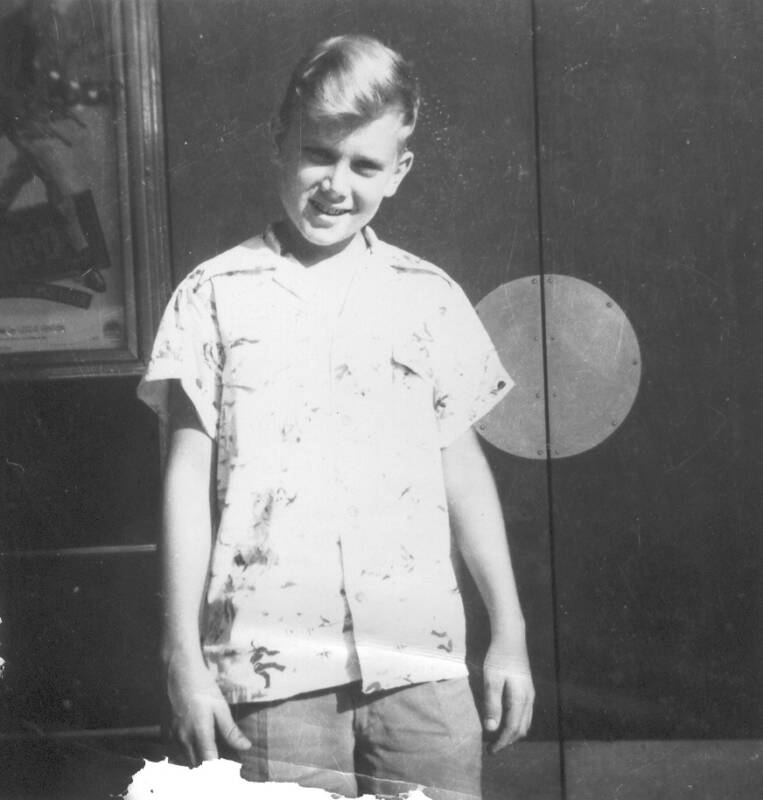
This young kid would one day grow up and become mayor of South Pittsburg, Tennessee, Bob Sherrill. Here he is pictured in front of the Princess Theatre around 1948/49.

Rosalia “Rosie” Raulston, Whitworth who worked the ticket booth for the Princess Theatre, is pictured above inside of the theater about 1948.
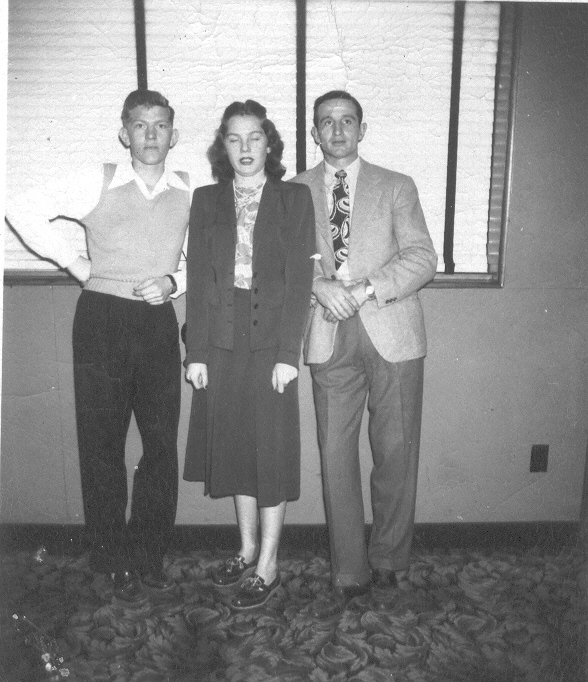
Pictured above inside of the Princess Theatre at South Pittsburg, Tennessee from left to right are: Jere R. Brown along with Martha and Joe Hogan. Picture taken around 1948/49.
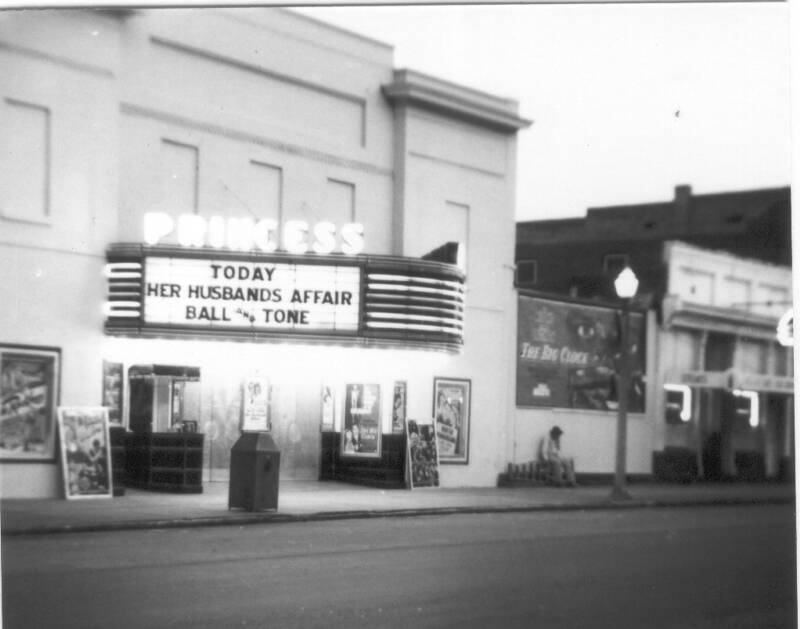
The Princess’ marquee lights up Cedar Avenue one evening as it advertises the film, “HER HUSBAND’S AFFAIR”.
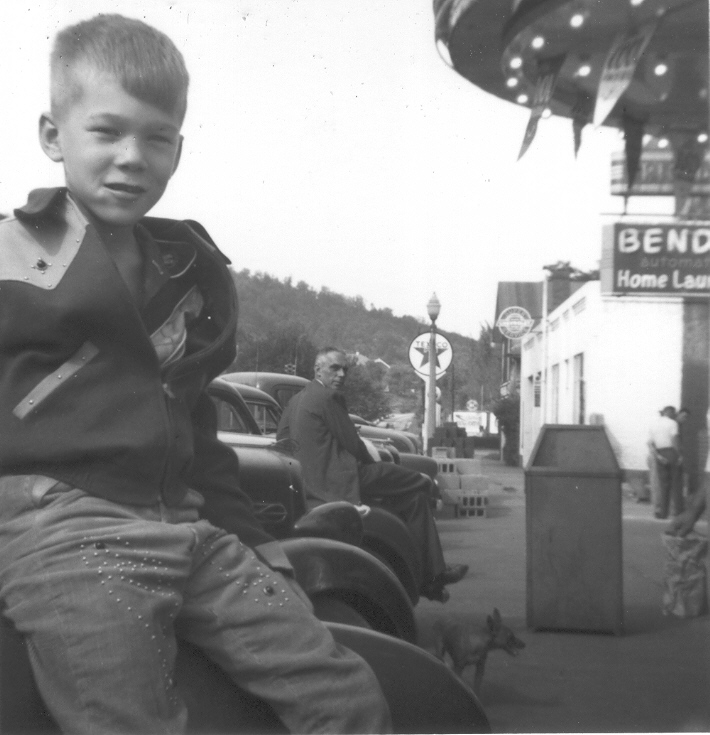
Robert McDowell, boy sitting on the car, poses for this picture as his father, Herman McDowell, manager of the Princess Theatre, sits just a few cars behind. Note the small dog near the waste can. Do you think he is looking at the theater’s doors waiting for an opportunity to make break for the concession stand on the inside?
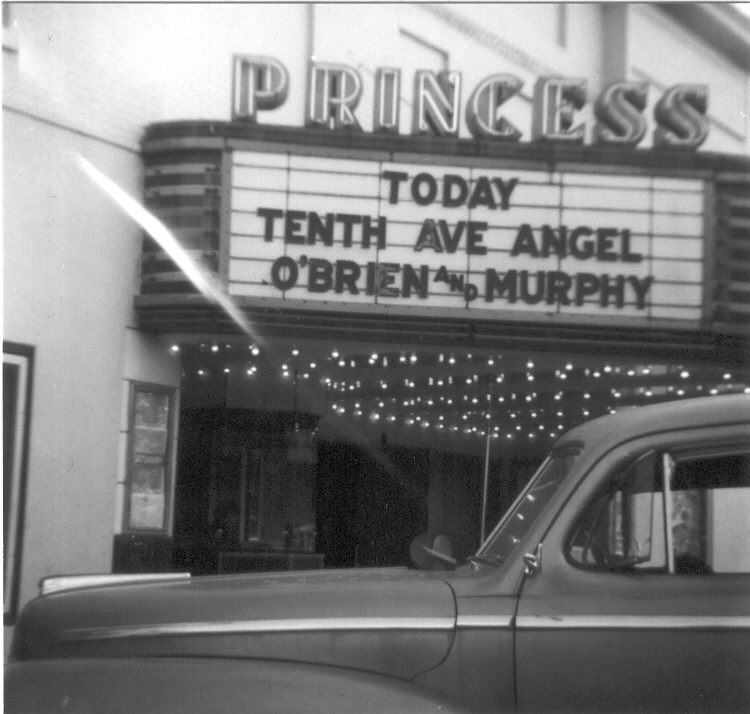
The Princess Theatre is pictured above in the late afternoon as it prepares to open for the showing of of the film, “TENTH AVENUE ANGEL”.

Herman McDowell, Princess Theatre manager, poses in this picture with his son, Robert.

Jack Ellis is pictured here on November 21, 1948 as a projectionist in training. The picture was made by Benton Summers who was the full time projectionist at the Princess Theatre. Ellis’ regular position was that of ticket taker-doorman and he changed the marquee board about fives times a week.
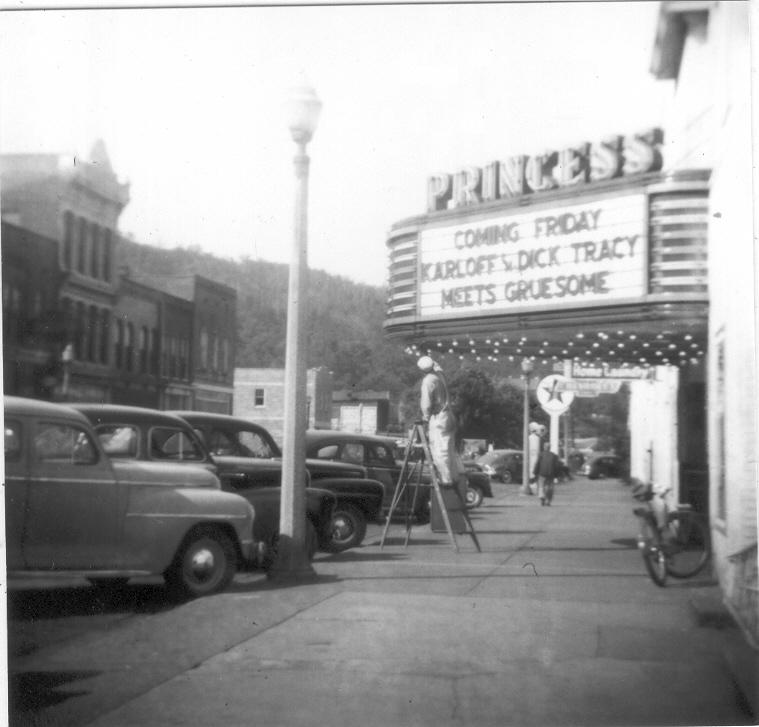
Pictured above an employee replaces one of the lights on the underside of the Princess’ marquee.
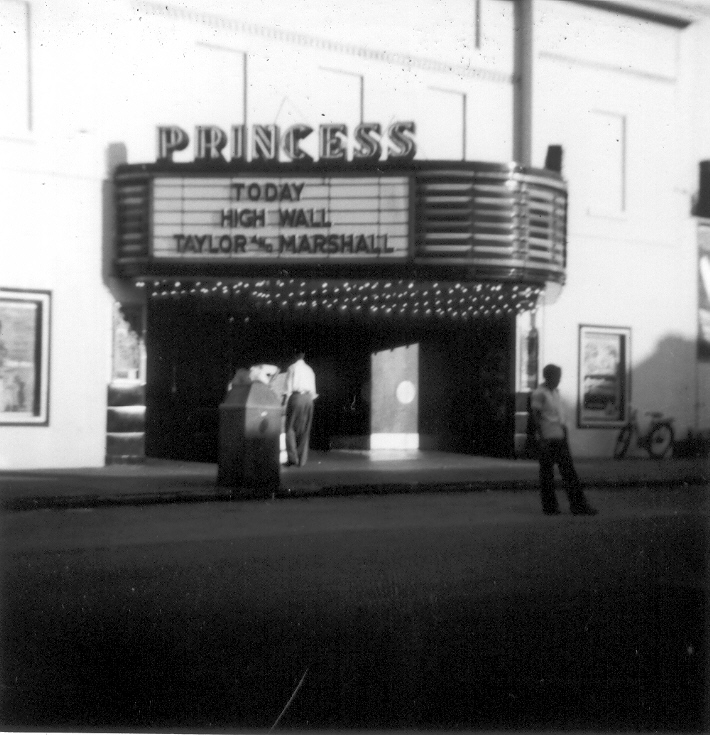
The Princess Theatre is pictured above in the late afternoon as it prepares to open for the showing of of the film, “HIGH WALL”.
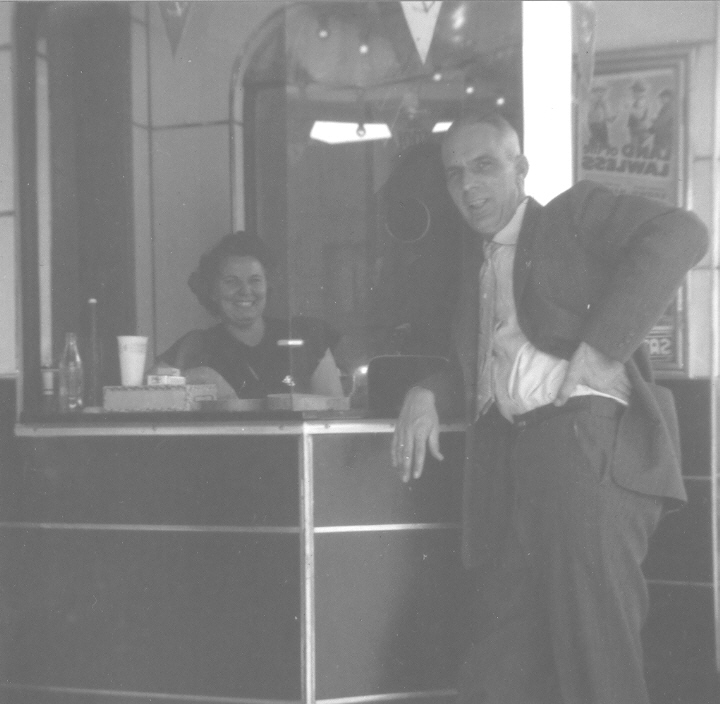
Rosalia “Rosie” Raulston Whitworth works the Princess Theatre’s ticket booth while the theater’s manager, Herman McDowell, stands by looking as if he is going to buy the evening’s first movie ticket. Jack Ellis, who donated these pictures thinks McDowell looks like Humphrey Bogart.
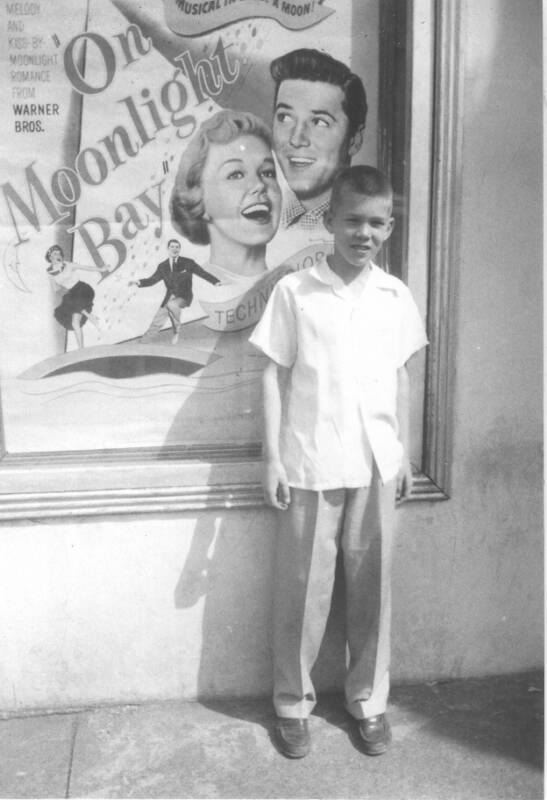
Robert McDowell, son of Princess Theatre manager, Herman McDowell, poses in this picture by one of the theater’s outside poster cases.
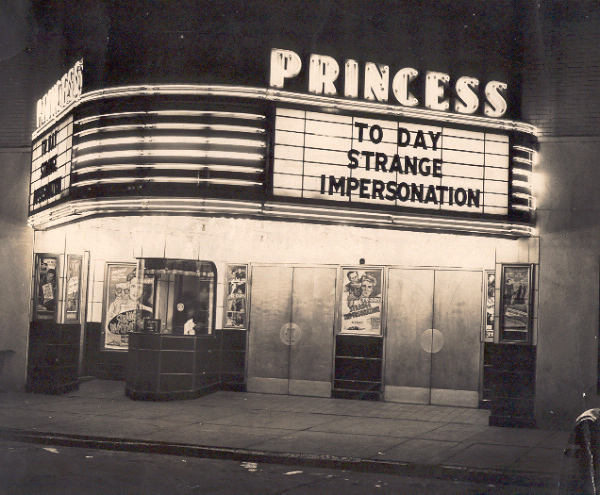
Another great nighttime view of the Princess Theatre at South Pittsburg, Tennessee.
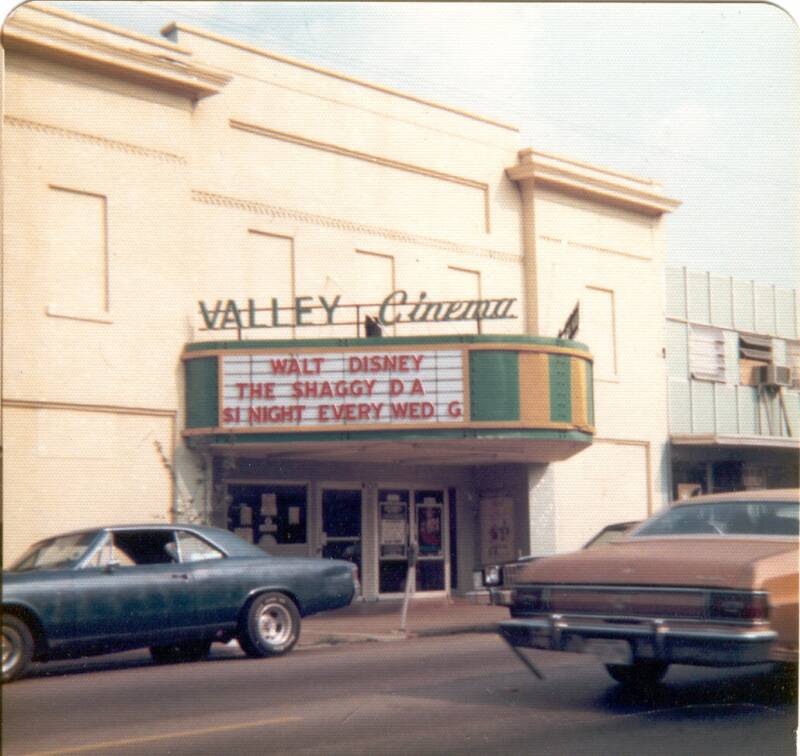
This one shows the old Princess Theatre when known as the Valley Cinema in the late 1970s. Note that the old marquee is advertising the film, “THE SHAGGY D.A.” starring Dean Jones. The film was released on December 17, 1976.
Restoration Progress Photos

The above two photographs show the Princess Theatre interior in 1998 before the roof collapsed. The top shows the stage area while the lower shows the balcony and front entrance. Architectural students of the University of Tennessee at Knoxville made the pictures for presentation to the City Commission of South Pittsburg in the beginning effort to preserve the historic structure. Photographs courtesy, Sparkman & Associates Architects, Inc.
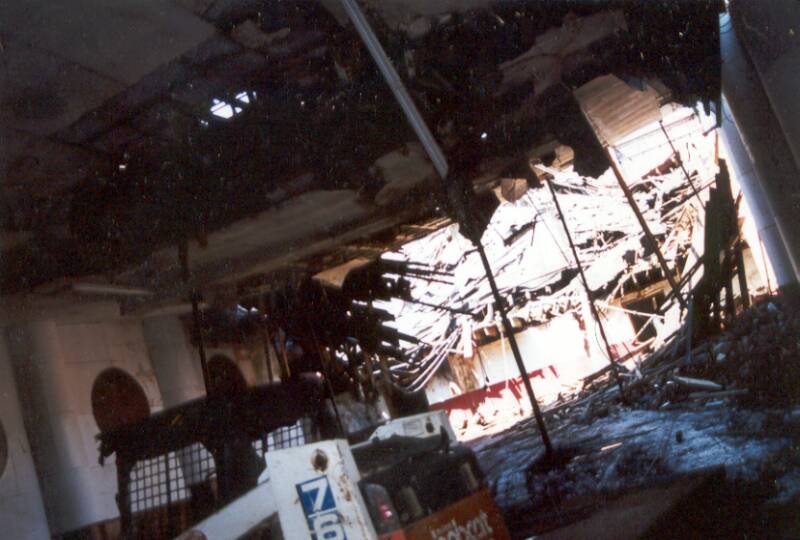

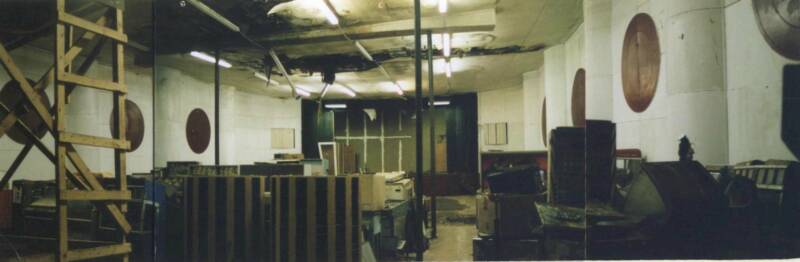
Pictured above are two photos showing the interior of the Princess Theatre in April 2000. The City of South Pittsburg, Tennessee acquired ownership of the historic building in 1999 to save the structure from being razed for a parking lot. A leaking roof over several years caused catastrophic roof damage and failure after wood roof rafters rotted from the water damage and eventually gave way. Pictured first is the balcony and roof after collapse with small Bobcat tractor clearing debris. The second shows the interior north wall.


Pictured above are two views showing the interior of the Princess Theatre after it has been cleaned up in summer of 2000. The first picture is looking towards the front entrance while the second picture shows the rear of the building where the stage and screen once stood.

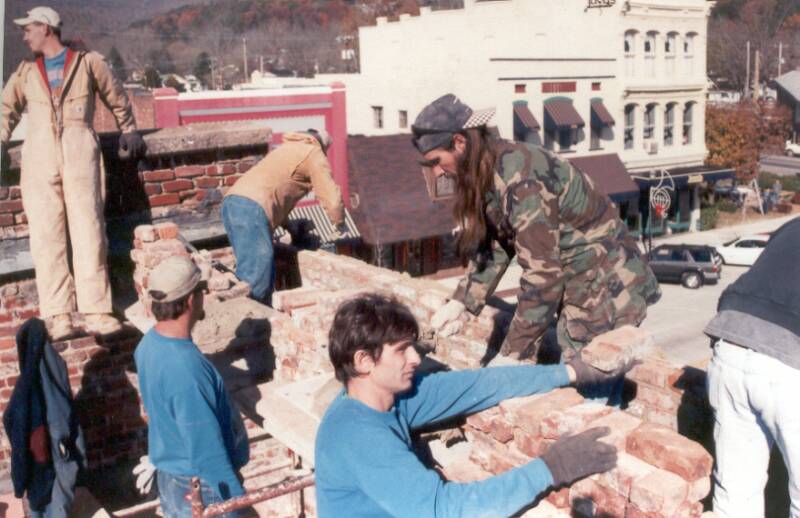
The above two photos made by Beenea Hyatt in December 2000 shows the reconstruction of the north side brick wall by contract workers. This wall had separated and was leaning to a point that it had to be rebuilt.
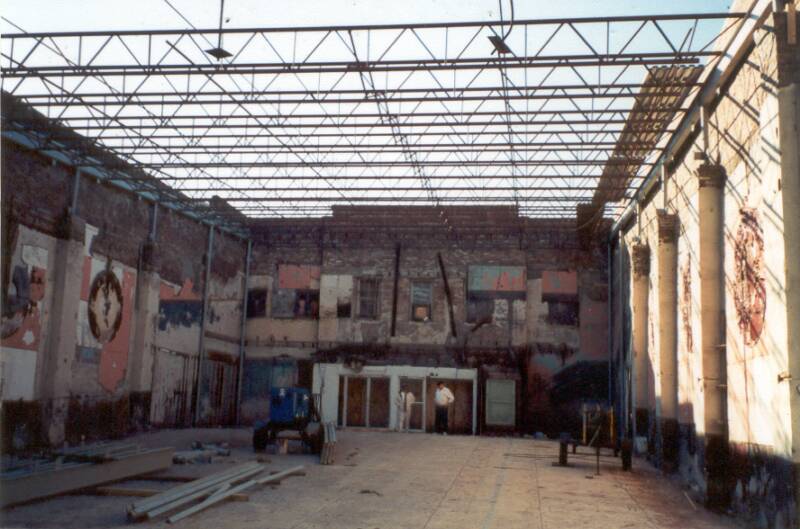
Pictured here are the new metal ceiling rafters hung in place in the spring of 2001.
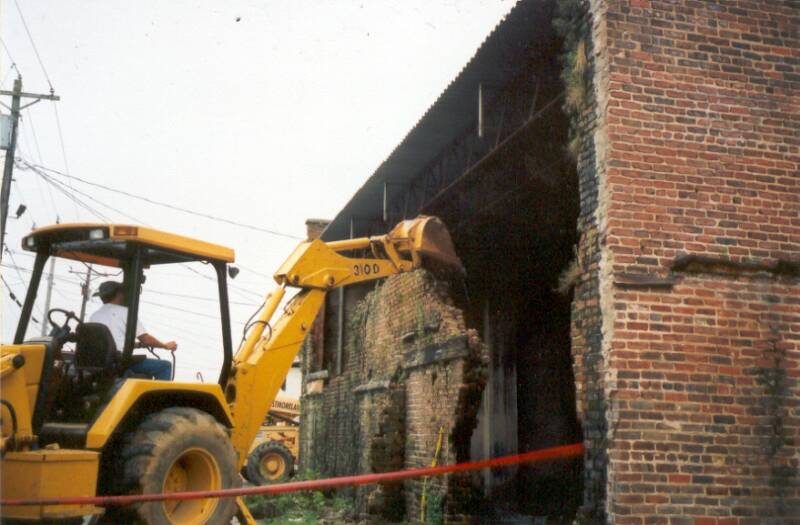
a backhoe can be seen removing the rear wall after it was decided that it could not be saved.

The architect, Frank Sparkman (hand on chin) in March 2001 discussing theater plans with Society members, Ed Elliott, (holding plans) along with Doris Durham and Mary Jane Brown. South Pittsburg Mayor Bob Sherrill is the gentleman walking in the back.
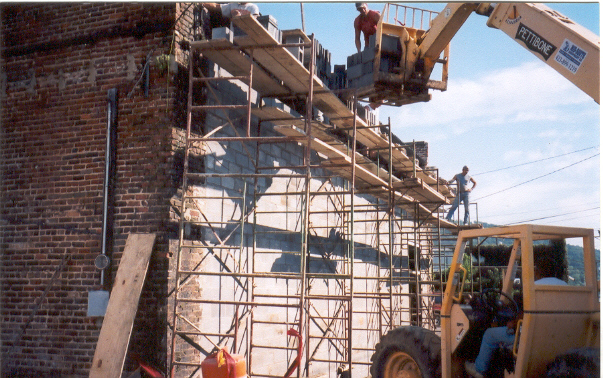
Reconstruction of the rear wall.
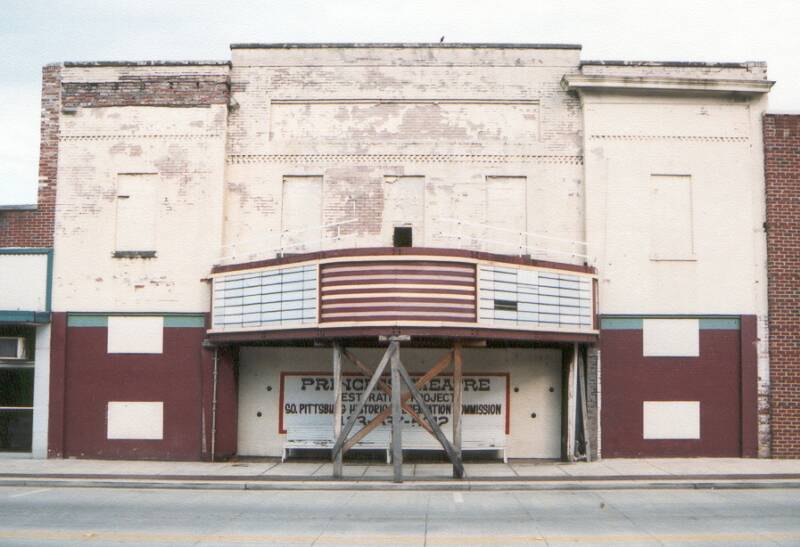
Pictured above is a photograph by Dennis Lambert of the Princess Theatre in early April 2003 showing the facade of the building with old paint. The marquee was supported by temporary supports after its weight, which was supported by three wall anchors, began to pull the center wall down. This would have destroyed the marquee and facade.
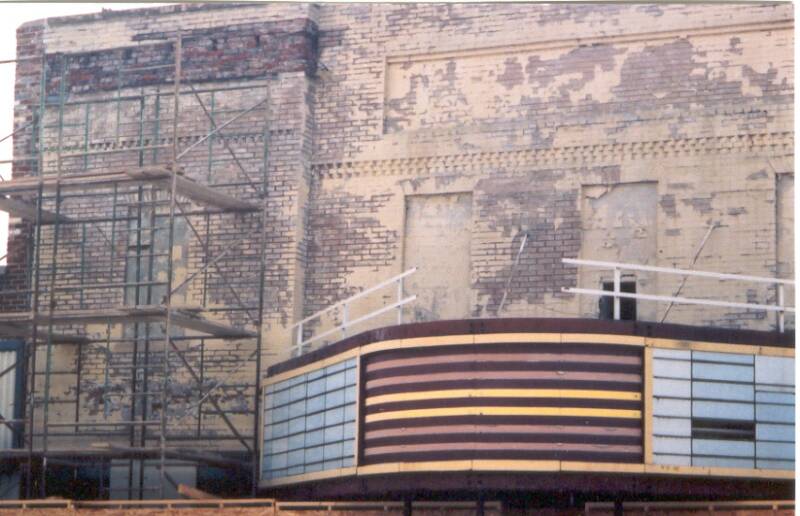
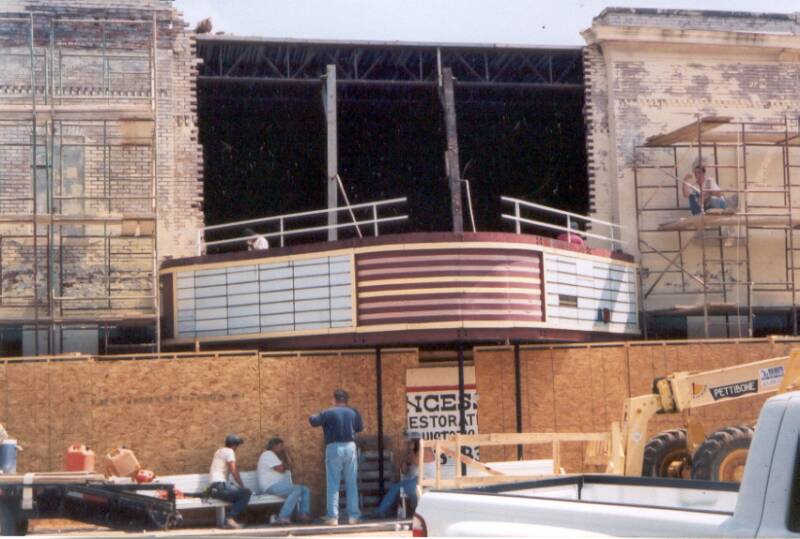
In the above first photograph, made in August 2003, the old paint has been partially removed from the brick. In the second photograph, also made in August 2003, can be seen that the brick of the center wall has been removed so that it can be rebuilt.


Pictured above first is another view of the facade work in August 2003. The above second photograph was made in January 2004 showing the the reconstruction of the center wall that was nearing completion and the paint removal process completed. Also in this picture can be seen contractors working on the beginning stage of the marquee renovation.
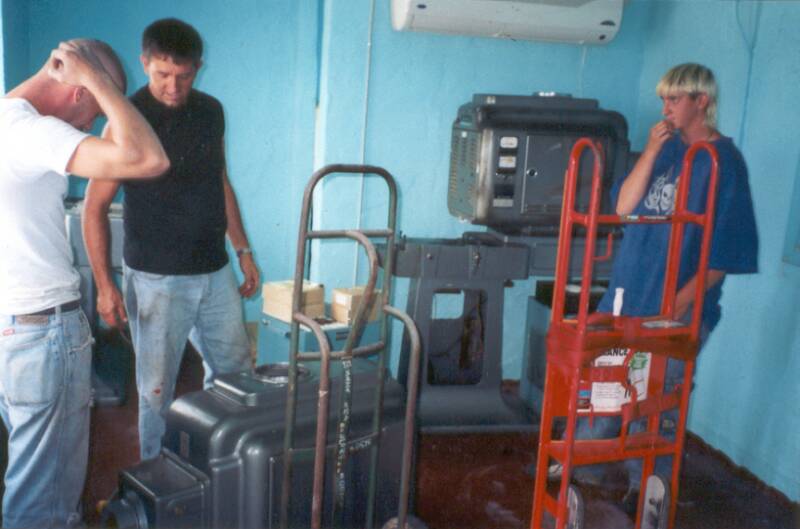

The above pictures show volunteers in August 2001 unloading used projector equipment for the theater that was donated by the Palace Theatre in Crossville, Tennessee. The theater seating, which was also donated by the Palace Theatre in Crossville, is shown shortly after being unloaded in South Pittsburg in March 2001.
 SPHPS, Inc.